He is dead.
No miracles left.
No sermons to clarify the situation.
No last-minute intervention.
Just silence.
A body in a tomb.
A city holding its breath.
Followers who do not know what comes next.
Holy Saturday.
No victory yet.
No resurrection to point to.
Just grief.
And still –
the day stretches on.
In Gaza
in the ruins of homes,
in the dust of collapsed hospitals,
in the bodies waiting to be named
this is not one day.
It is every day.
From the streets of Beirut
to the ports of Yemen,
from shattered neighbourhoods in Syria
to cities that no longer recognise their own skyline
the silence is the same.
It is the silence of families waiting
for names that will never be called.
Holy Saturday is the day God is a civilian.
No rank.
No uniform.
No strategic value.
Just a body
that needs burying.
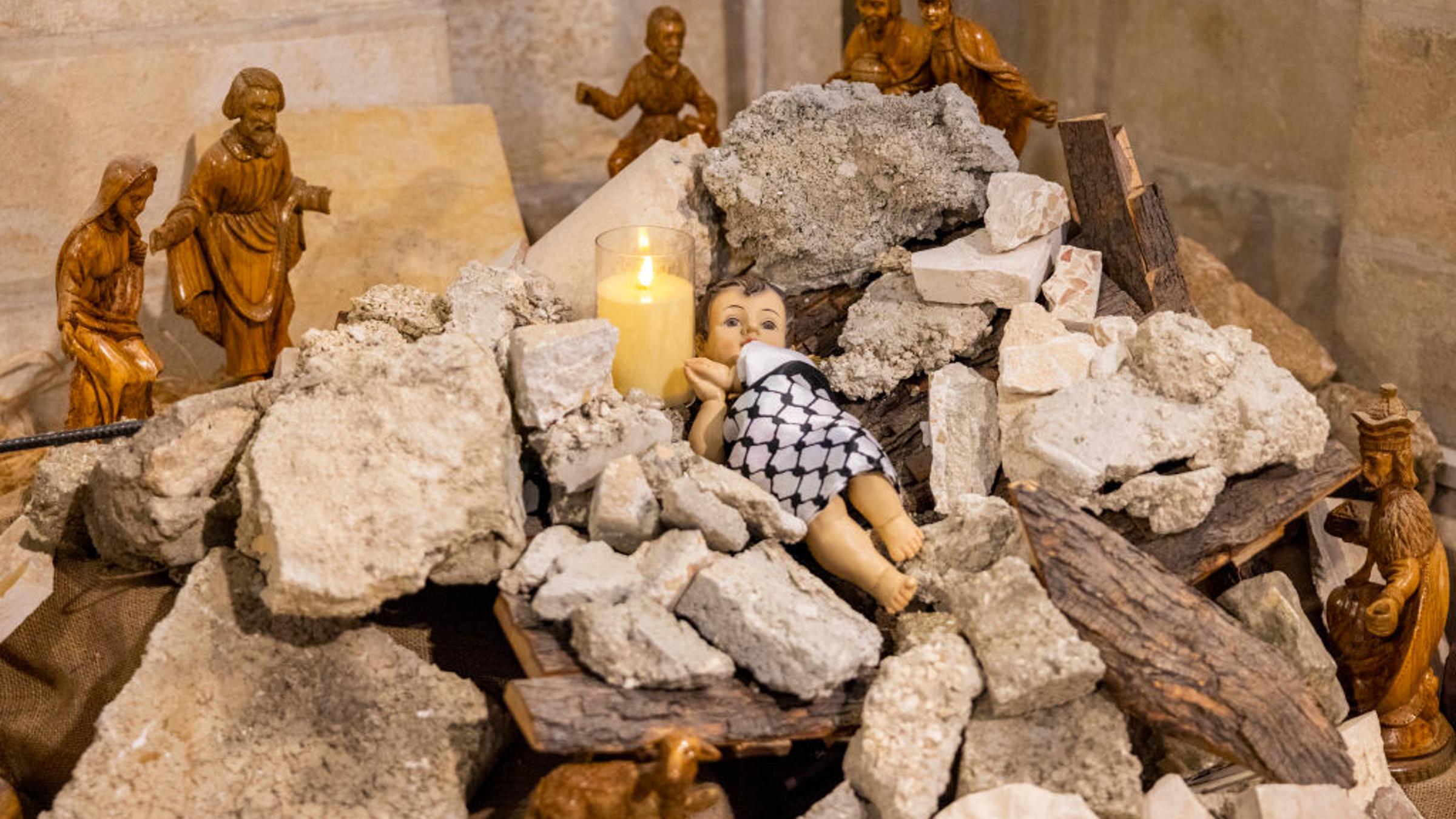
A child in the rubble.
A Christ in the debris.
No throne—just splinters and dust.
Where is God?
Not fixing it.
Not stopping it.
Not explaining it.
Just there.
Buried.
Hidden.
Silent.
“My God, my God, why have you forsaken me?”
– Matthew 27:46
If you cannot find God in a morgue in Gaza,
you will not find him in a cathedral of power.

Reflection
Holy Saturday is the refusal of easy theology.
It dismantles the illusion of a God who always intervenes, always resolves, always explains.
Instead, it reveals a God who remains present in absence.
For those living in the aftermath of violence, this is not metaphor – it is lived reality.
Faith here is not certainty.
It is endurance.
If we only look for God in the ruins we find politically acceptable,
we are not looking for God.
We are looking for a mascot.
Holy Saturday refuses that.
It insists that God is not aligned with our preferred narratives of suffering,
but present in the fullness of it.
Discover more from The Broken Church
Subscribe to get the latest posts sent to your email.

