“They were kept from recognising him.”
– Luke 24:16
Two walk away from Jerusalem.
Disappointed.
Disoriented.
Done with hope that didn’t hold.
And still
he walks with them.
A stranger on the road.
A migrant between places.
Leaving a city of trauma behind.
Unrecognised.
“What are you discussing together?” he asks.
– Luke 24:17
And they tell him
about violence,
about injustice,
about hope that collapsed under pressure.
Would Jesus be Islamophobic?
Would he walk past the man in the keffiyeh?
Avoid the woman in the hijab?
Dismiss the refugee at the border?
Or is he already there
unrecognised
in the people we have been taught to fear?
We look for him
in the defence of “British values,”
in the protection of our shores,
in the language of order and control.
But he keeps appearing elsewhere.
In the man in the keffiyeh.
In the woman in the hijab.
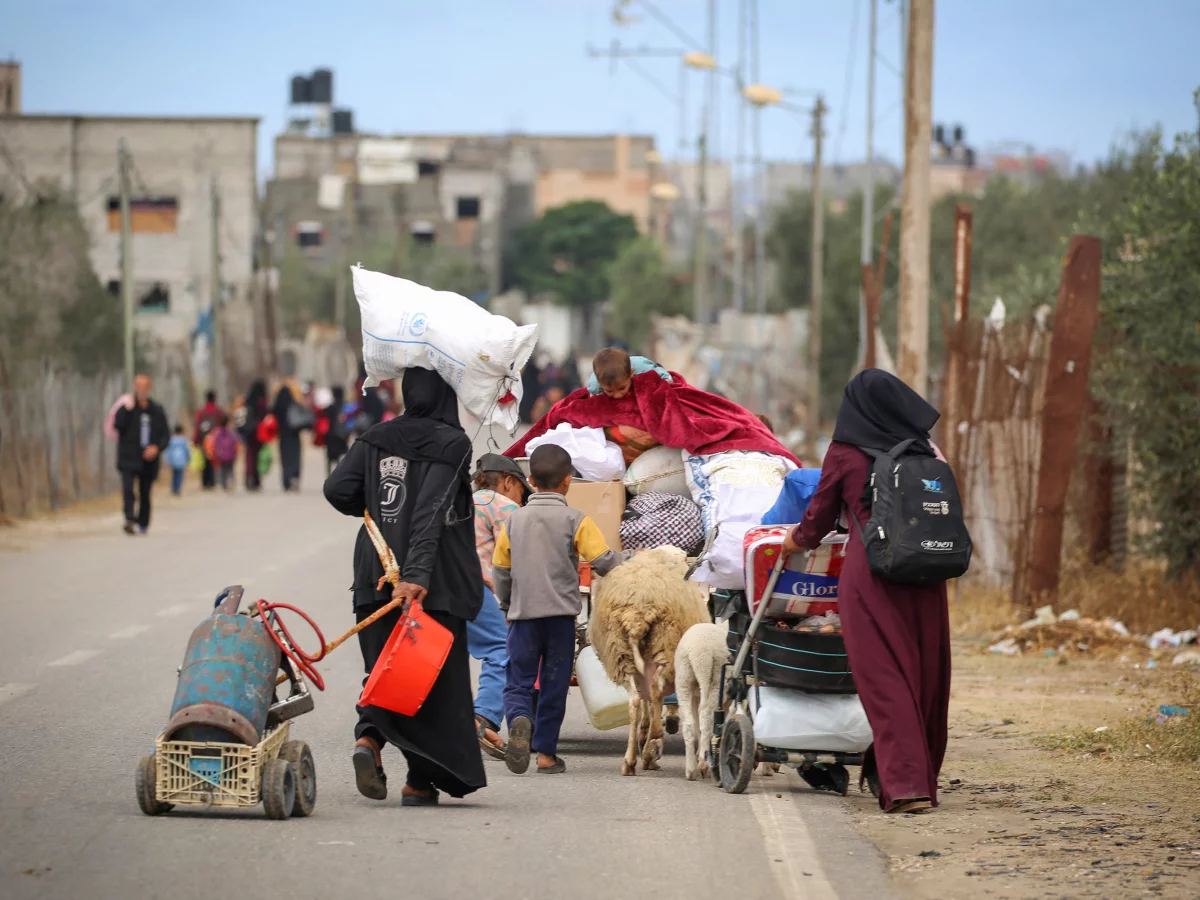
In the family crossing the Channel
because their homes were levelled
by weapons we sold
or conflicts we sustained.
They do not recognise him.
Not until the table again.
Not until the breaking of bread.
And suddenly
they see.

Reflection
The risen Christ is first recognised not in power, but in presence.
On the road to Emmaus, he walks alongside those who are confused, grieving, and disillusioned.
He joins them before he is recognised.
If Christ is found among the stranger,
then exclusion becomes a failure of recognition.
The question is not simply what we believe.
It is whether we would recognise Christ
in the people we have learned to distrust.
Series Conclusion
After the Road
They recognised him in the breaking of the bread.
– Luke 24:35
And then – he was gone.
No final speech.
No manifesto.
No instructions for fixing the world.
Just recognition.
We have walked the story again:
A table where no one was excluded.
A cross where violence was exposed.
A silence where God did not intervene.
A resurrection that did not erase wounds.
A road where Christ walked unrecognised.
Nothing about the world has suddenly resolved.
The bombs do not stop because we have reached Easter.
The dead are not undone by our liturgies.
The systems of power remain intact.
And yet
something has been revealed.
Not a strategy.
Not a policy.
But a person.
A Christ who:
Eats with those who will fail him
Refuses to mirror the violence of empire
Remains present in suffering rather than escaping it
Carries wounds into resurrection
Walks alongside those we struggle to recognise
If we recognise him at all,
it will not be in dominance.
It will be:
In the breaking of bread that includes rather than excludes.
In the refusal to justify violence, even when it is called necessary.
In the decision to remain present where suffering is unresolved.
In the quiet, costly work of hope that does not deny reality.
In walking with those we have been taught to fear.
The question was never really:
Who would Jesus bomb?
The question is:
Why do we find it so easy to imagine that he would?
And what does that reveal about the distance
between the Christ we follow
and the Christ we have made?
The story ends
not with certainty,
but with a journey.
Back down the road.
Back into the world.
Back to the table.
To recognise him again
or to miss him completely.
And if our faith requires the death of our neighbours
to feel secure,
then it is not the faith of the resurrected Christ.
It is merely the ancient religion of empire,
wearing a stolen crown of thorns.
Discover more from The Broken Church
Subscribe to get the latest posts sent to your email.
 The Broken Church