Today is Slavery Remembrance Day.
Today (23rd August) is Slavery Remembrance Day, or more accurately International Day for the Remembrance of the Slave Trade and its Abolition. Until I happened upon something yesterday I didn’t know such a day existed.
I knew the familiar story told in the UK. I knew the names we tend to remember. William Wilberforce. Thomas Clarkson. The abolitionists. The speeches in Parliament. The campaigns. The eventual legislation. And those stories matter, but they are not the whole story. The story of the abolition of the slave trade is too often told as though freedom was something graciously handed down by powerful British people to enslaved people who patiently waited to receive it. That is not history.
The enslaved resisted. They rebelled. They escaped. They organised. They preserved their humanity in a world built upon denying it. They took extraordinary risks for freedom. And on the night of 22–23 August 1791, enslaved people in Saint-Domingue rose up in an uprising that would become part of the Haitian Revolution and play a crucial role in the history of the abolition of the transatlantic slave trade. That is why 23 August matters.
Slavery Remembrance Day is not simply an opportunity to congratulate ourselves on eventually doing the right thing. It is an opportunity to remember those whose names were forgotten, whose stories were buried and whose courage has too often been overshadowed by the names of the people who came later. History has a habit of doing that. It remembers the powerful. It remembers the people who get statues, biographies and parliamentary portraits. And it forgets the people whose resistance made change necessary.
Who gets remembered?
I have been thinking about that question again in the last week.
Professor Jason Arday was, at the age of 41, the youngest Black professor ever appointed at the University of Cambridge. He was an academic. An author. A scholar. A working-class Black man. An autistic man. Jason Arday is dead.
He became the subject of an extraordinary public spectacle. There were serious questions raised about his work, his qualifications and aspects of his personal story. Those questions should not simply be ignored because Jason Arday was Black, or because he was someone many people admired. Truth matters. Academic integrity matters. Journalism matters. But so does humanity.
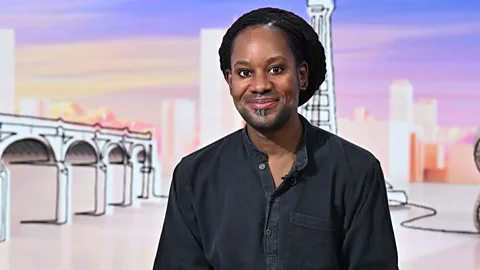
One completed review into allegations concerning plagiarism in his PhD did not uphold the allegations, attributing problems to honest and reasonable error. Other questions and investigations remained unresolved. Jason Arday denied wrongdoing. In other words: at the centre of all of this was a human being, facing allegations, investigations and questions that had not all reached a conclusion. But the story did not stop there. It expanded. It consumed his work, his life, his past and his identity. According to a media analysis by NewsCord, 188 articles about Jason Arday appeared in the nine days between his resignation from Cambridge and his death. One hundred and eighty-eight. In nine days. There is something about that number which ought to make us stop. Not because every article was necessarily wrong. Not because journalists should never investigate. Not because public figures should be immune from scrutiny. But because at some point we have to ask what happens when scrutiny becomes something else. When investigation becomes spectacle. When a story becomes a feeding frenzy. When a person becomes content. And when the person at the centre of the story is no longer treated as a person at all.
You do not have to be perfect to deserve humanity
This is where I think the conversation about Jason Arday is already in danger of going wrong.
We are being encouraged to choose sides. Either he was an innocent victim, beyond criticism. Or he was a fraud who deserved everything that followed. But human beings are rarely that convenient. Jason Arday may have made mistakes, he was human after all. There may be questions that still need answers. There may be things that will eventually be shown to be true, and things that will eventually be shown to be false. But none of that means we stop asking whether he was treated with humanity. None of that means we stop asking whether the intensity of the coverage was proportionate. And none of that means we stop asking why a Black academic (particularly one who represented so many things that some people find uncomfortable) became such an irresistible target. Black excellence. Working-class excellence. Academic excellence. Neurodivergent excellence. A Black man entering one of Britain’s oldest and most prestigious institutions.
Perhaps it is uncomfortable to ask whether racism played a part in what happened (uncomfortable only for those who aren’t daily on the receiving end of racism). Uncomfortable questions are still questions worth asking. Indeed, perhaps they are the questions most worth asking. Because racism is not always a person standing in the street shouting a slur. Sometimes it is in the stories we choose to tell. Sometimes it is in the people we decide are symbols rather than human beings. Sometimes it is in the extraordinary scrutiny directed at one person while others are granted privacy, complexity, grace or simply the opportunity to get on with their lives. And sometimes racism is revealed not simply in what is said, but in who we decide is worth destroying.
“Let justice roll down”
The prophet Amos spoke to a deeply religious society. That is important. He was not speaking to people who had abandoned worship. They still gathered. They still sang. They still made offerings. And God, through the prophet, says:
“I hate, I despise your festivals,
and I take no delight in your solemn assemblies.
Even though you offer me your burnt offerings and grain offerings,
I will not accept them…
But let justice roll down like waters,
and righteousness like an ever-flowing stream.”
— Amos 5:21–24, NRSV
The context matters. Amos is not offering us a nice slogan for a banner. He is confronting a society that believed its worship could coexist with injustice. It could not. God was not impressed by their songs when their society was organised in ways that crushed people. And perhaps that should make us uncomfortable too. Because remembrance without justice is simply nostalgia.
We can remember slavery while refusing to confront the racism that continues to shape our world. We can celebrate abolition while telling a version of history in which enslaved people themselves disappear. We can quote Martin Luther King Jr while ignoring the injustice he named. We can say that Black lives matter while still treating Black people as symbols, threats, problems or stories to be consumed. We can mourn Jason Arday while refusing to ask what happened around him.
Remember the names we forgot
Perhaps Slavery Remembrance Day should make us ask not simply, Who ended slavery? Perhaps we should also ask: Whose resistance made abolition inevitable? Whose courage has been forgotten? Whose names were never recorded? Whose stories were never considered important enough to preserve?
And then perhaps we should ask the same question of our own time.
Who are we failing to see? Who is being turned into a headline rather than treated as a human being? Who is being discussed endlessly but never actually heard? Who is being judged before the truth has had time to emerge? Who is carrying a burden that we would never willingly carry ourselves?
I do not know everything that happened to Jason Arday. Neither, at this point, does anyone else. There are facts that remain to be established. Questions that remain unanswered. Processes that remain incomplete.
But I do know this. He was a human being. He was more than the allegations made against him. More than the articles written about him. More than the mistakes he may or may not have made. More than a symbol in somebody else’s culture war.
And if we remember anything from this moment, I hope it is this:
We should not wait until someone is dead before we decide that their humanity matters. We should not require people to be perfect before we defend their dignity. And we should be very careful about the stories we tell—because stories can liberate, but they can also erase.
Today, I am thinking about the enslaved people whose courage changed history but whose names most of us will never know. I am thinking about the stories Britain prefers to tell about itself. And I am thinking about Jason Arday. About the human being behind the headlines. About those who loved him. And about a question which, I think, should haunt us: Who will we remember only after it is too late?
The media and the click bait articles are moving on from Jason Arday. His story no longer serves their purpose. It not longer attracts clicks or money. The media machine has moved on, it has it’s next victim in it’s sights.
May justice roll down like waters.
May we learn to see the person behind the headline.
May we see the humanity that should have been there all along.
Discover more from The Broken Church
Subscribe to get the latest posts sent to your email.

